How Chatbots Improve Customer Engagement and Business Efficiency: A Complete Guide for Modern Businesses
Introduction
Think about a scenario where you go online at night and ask a question about a certain product or a service. Rather than having to wait for an answer until the next day, you will get an immediate response that includes some personalized recommendations and help place an order. All this can be achieved using AI-powered chatbots.
With time, customers have developed different expectations which have put businesses under increased pressure to give fast and personalized responses to their queries. This is something difficult to achieve using conventional customer service approaches since businesses are growing daily. For this reason, many businesses are adopting chatbots during their digital transformation process.
Contemporary chatbots are not just limited to answering simple questions. With the use of Artificial Intelligence and Natural Language Processing, modern chatbots are capable of interpreting customer intent, automating tasks, qualifying leads, recommending products, scheduling meetings and giving round-the-clock support.
In this guide, we will take you through the advantages of chatbots, use cases, how to implement them, best practices and mistakes to avoid when implementing them.
What Are Chatbots?
A chatbot is a software application designed to simulate human conversations through text or voice. It interacts with users on websites, mobile applications, messaging platforms, and social media channels.
There are two primary types of chatbots:
Rule-Based Chatbots
These chatbots follow predefined rules and scripted responses. They are ideal for answering common questions but have limited flexibility.
AI-Powered Chatbots
AI chatbots use machine learning and natural language processing to understand context, learn from interactions, and provide more personalized and intelligent responses.
Why Customer Engagement Matters
Customer engagement refers to how businesses interact with customers throughout their journey.
Highly engaged customers are more likely to:
- Trust your brand
- Make repeat purchases
- Recommend your business
- Leave positive reviews
- Stay loyal over time
Chatbots help maintain continuous engagement by providing immediate assistance whenever customers need it.
How Chatbots Improve Customer Engagement
1. Provide Instant Responses
Today's customers expect immediate answers. Waiting hours or days for support often leads to frustration.
Chatbots respond within seconds, improving customer satisfaction and reducing abandonment.
Example
A visitor asks whether a product is available in a particular size. The chatbot instantly checks inventory and provides the answer.
2. Offer 24/7 Customer Support
Unlike human agents, chatbots never sleep.
They can answer questions, resolve common issues, and assist customers outside normal business hours.
This ensures businesses never miss potential sales opportunities.
3. Deliver Personalized Experiences
Modern AI chatbots analyze customer behavior, browsing history, and previous interactions.
They can recommend:
- Products
- Services
- Content
- Special offers
- Relevant support articles
Personalized conversations make customers feel valued and improve conversion rates.
4. Improve Customer Satisfaction
Quick responses reduce frustration.
Customers appreciate businesses that solve problems efficiently without long waiting times.
Higher satisfaction often translates into better retention and stronger customer loyalty.
5. Support Multiple Communication Channels
Businesses can integrate chatbots across:
- Websites
- Mobile apps
- Facebook Messenger
- Live chat platforms
Customers receive a consistent experience regardless of where they initiate contact.
How Chatbots Improve Business Efficiency
Automate Repetitive Tasks
Customer service teams spend significant time answering repetitive questions.
Chatbots automate tasks like:
- Order tracking
- Password resets
- Appointment scheduling
- FAQs
- Shipping information
- Refund policies
This allows employees to focus on more complex customer issues.
Reduce Operational Costs
Hiring and training large support teams can be expensive.
Chatbots reduce support costs by handling thousands of conversations simultaneously without increasing staffing requirements.
Generate Better Leads
AI chatbots can qualify potential customers by asking relevant questions.
For example:
- Budget
- Requirements
- Business size
- Preferred services
Qualified leads can then be transferred directly to sales representatives.
Increase Sales and Conversions
Chatbots guide visitors through the buying journey by recommending products, answering objections, and simplifying the checkout process.
Many businesses experience higher conversion rates because customers receive immediate assistance.
Collect Valuable Customer Insights
Every chatbot interaction generates useful data.
Businesses can identify:
- Frequently asked questions
- Customer pain points
- Popular products
- Buying behavior
- Service improvement opportunities
These insights support better decision-making.
Practical Examples Across Industries
E-commerce
- Product recommendations
- Cart recovery
- Order tracking
- Return assistance
Healthcare
- Appointment booking
- Patient reminders
- Basic symptom guidance
- Prescription refill requests
Banking
- Balance inquiries
- Transaction updates
- Fraud alerts
- Loan information
Education
- Student admissions support
- Course recommendations
- Enrollment assistance
- FAQ automation
Travel and Hospitality
- Hotel reservations
- Flight information
- Booking modifications
- Travel recommendations
Chatbots vs Traditional Customer Support
| Feature | Traditional Support | AI Chatbots |
|---|---|---|
| Availability | Business Hours | 24/7 |
| Response Time | Minutes or Hours | Seconds |
| Scalability | Limited | High |
| Cost | Higher | Lower Over Time |
| Personalization | Moderate | Advanced |
| Simultaneous Conversations | Limited | Thousands |
| Data Collection | Manual | Automated |
Actionable Tips for Implementing Chatbots
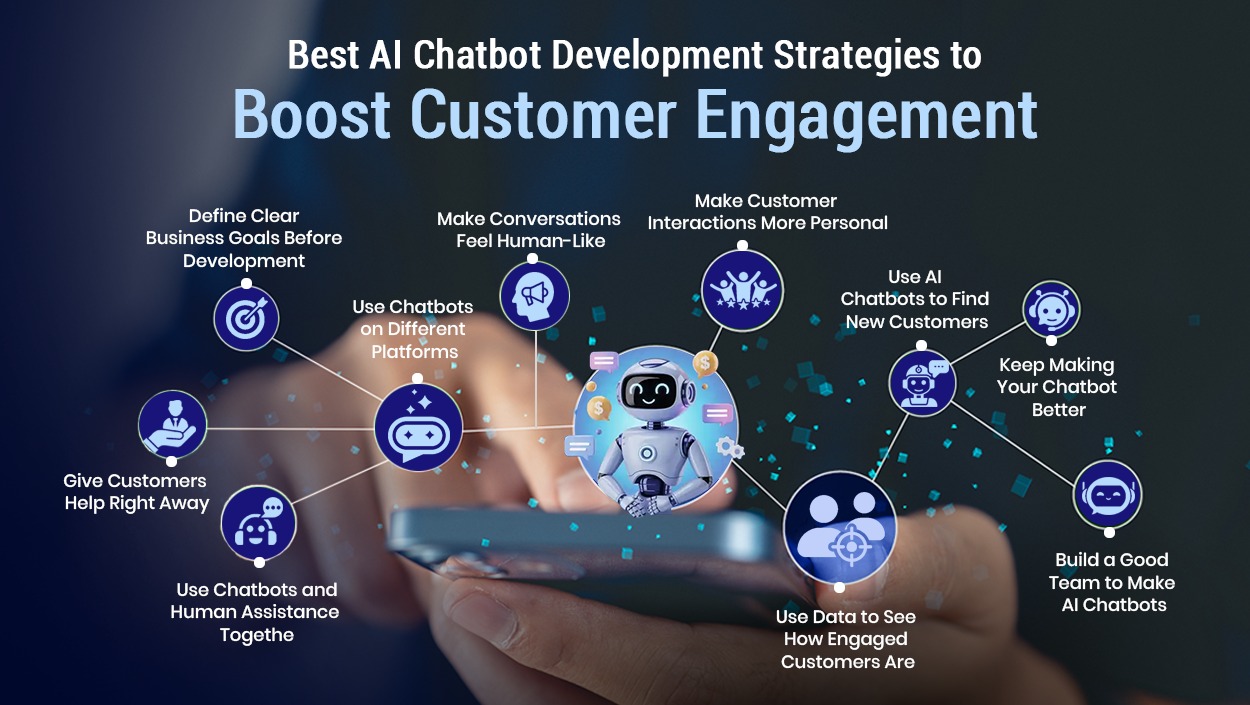
Define Clear Objectives
Determine whether your chatbot will focus on customer support, lead generation, sales, or appointment scheduling.
Choose the Right Platform
Select a chatbot solution that integrates with your CRM, website, and communication channels.
Keep Conversations Natural
Design chatbot interactions using simple and conversational language.
Avoid robotic responses whenever possible.
Provide Human Support When Needed
Not every issue can be solved through automation.
Always offer customers the option to connect with a live representative.
Continuously Improve Performance
Analyze chatbot conversations regularly.
Update responses, improve workflows, and train AI models based on customer interactions.
Common Mistakes to Avoid
Many businesses reduce chatbot effectiveness by:
- Making conversations overly robotic
- Hiding access to human support
- Ignoring customer feedback
- Overcomplicating chatbot workflows
- Failing to update chatbot knowledge
- Using chatbots without clear objectives
Avoiding these mistakes leads to better customer experiences.
Best Practices
To maximize chatbot success:
- Focus on solving customer problems quickly.
- Personalize conversations whenever possible.
- Integrate chatbots with CRM and customer databases.
- Monitor chatbot performance regularly.
- Protect customer data with strong security measures.
- Test chatbot conversations before deployment.
- Continuously optimize based on analytics.
Key Takeaways
- Chatbots improve customer engagement through instant, personalized, and always-available support.
- AI-powered chatbots automate repetitive tasks, reducing operational costs.
- Businesses benefit from increased efficiency, higher customer satisfaction, and better lead generation.
- Human support should complement chatbot automation for complex issues.
- Continuous optimization is essential for long-term chatbot success.
Conclusion
goals, integrating chatbots with other systems, monitoring their performance, and balancing automation and human communication.
Chatbots are an important asset for companies that aim at increasing customer involvement and improving business performance. With the use of chatbots, they can offer customers instant help, automate tasks, and provide individualized services, which enables them to meet growing customer demands and save money.
Nevertheless, in order to successfully use chatbots, businesses need to do much more than just purchase them. It is necessary to
As artificial intelligence keeps developing, chatbots will keep becoming more intelligent, thus, they are worth investing in.
Call to Action
Are you ready to boost your customer experience and optimize your business process?
Deploy a chatbot based on artificial intelligence to get round-the-clock assistance, perform regular tasks, create leads, and ensure customer satisfaction. Define a proper strategy, evaluate its results, and always optimize your chatbot to offer outstanding experiences for the development of your business.
Frequently Asked Questions (FAQs)
1. What is a chatbot?
A chatbot is a software application that simulates conversations with users through text or voice to provide support, answer questions, and automate customer interactions.
2. How do AI chatbots improve customer engagement?
AI chatbots provide instant responses, personalized recommendations, 24/7 support, and seamless communication across multiple channels, resulting in better customer engagement.
3. Can chatbots replace human customer support?
No. Chatbots handle routine and repetitive tasks efficiently, but human agents remain essential for complex, sensitive, or specialized customer issues.
4. Which industries benefit the most from chatbots?
E-commerce, healthcare, banking, education, travel, hospitality, insurance, and real estate are among the industries that benefit significantly from chatbot technology.
5. Are chatbots suitable for small businesses?
Yes. Many affordable chatbot platforms help small businesses improve customer service, automate tasks, and generate leads without hiring large support teams.
6. How do chatbots improve business efficiency?
They automate repetitive tasks, reduce response times, lower operational costs, collect customer insights, and enable employees to focus on high-value activities.
7. What features should a modern chatbot have?
A modern chatbot should support AI-powered conversations, multilingual communication, CRM integration, analytics, omnichannel support, personalization, and live-agent handoff.
8. What is the biggest advantage of using AI-powered chatbots?
The biggest advantage is the ability to deliver fast, personalized, and consistent customer support at scale while improving operational efficiency and reducing business costs.